Local Services
Leading Momentum
A local-service web experience built to connect a focused service offer with a measurable referral path back to the studio site.
// stack
// area
[ the case ]
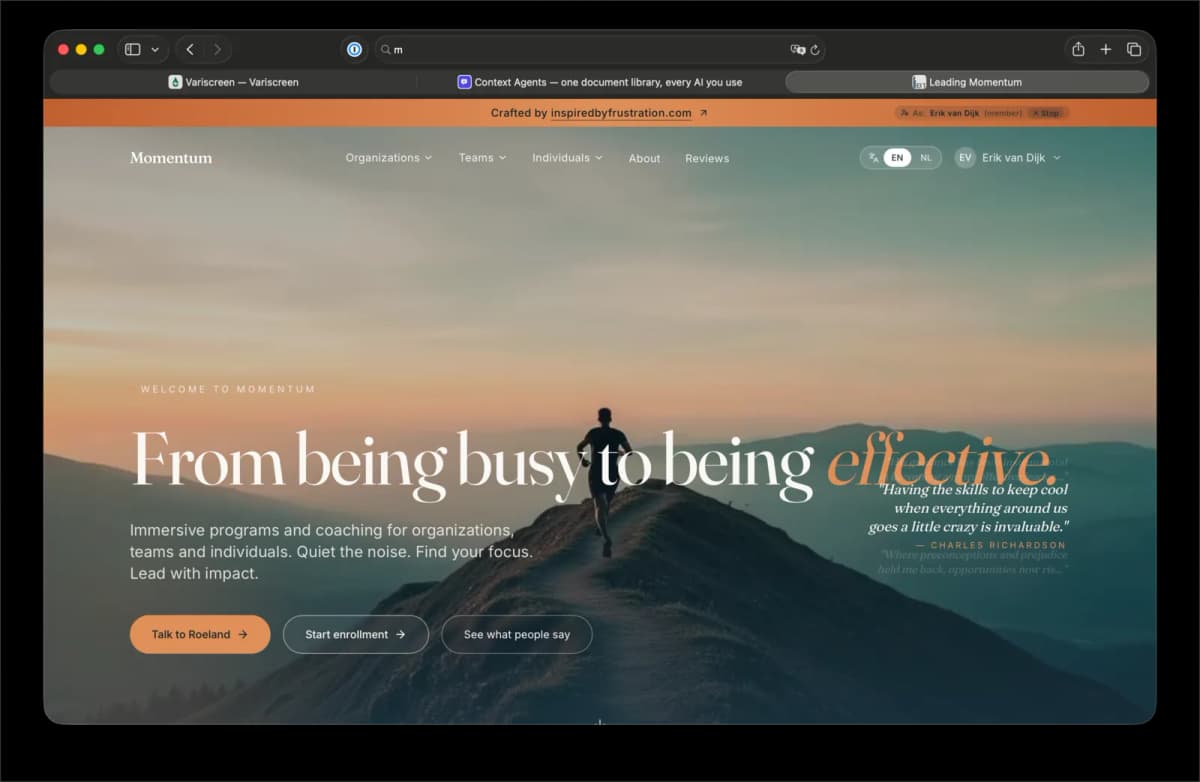
Roeland is a local-service web surface built with a Lovable workflow and measurable referral path, showing how a focused service offer can still use production-grade analytics and iteration.
Roeland is a focused public surface outside the core IBF app, with its own Lovable workflow and attribution path back to the apex marketing site. The work treats the public page, analytics signal, and referral route as one system.
The project matters because small local-service sites still need production thinking: clear offer, fast pages, trackable referrals, and a workflow for iterating without losing provenance.
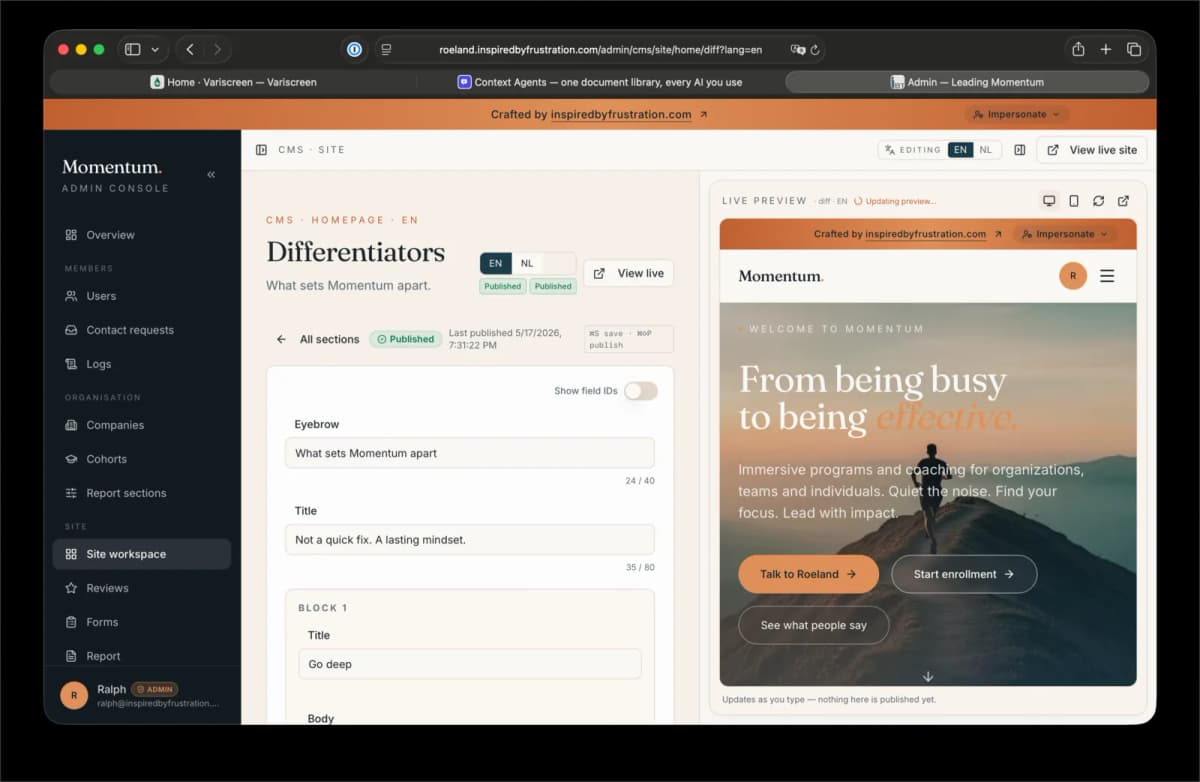
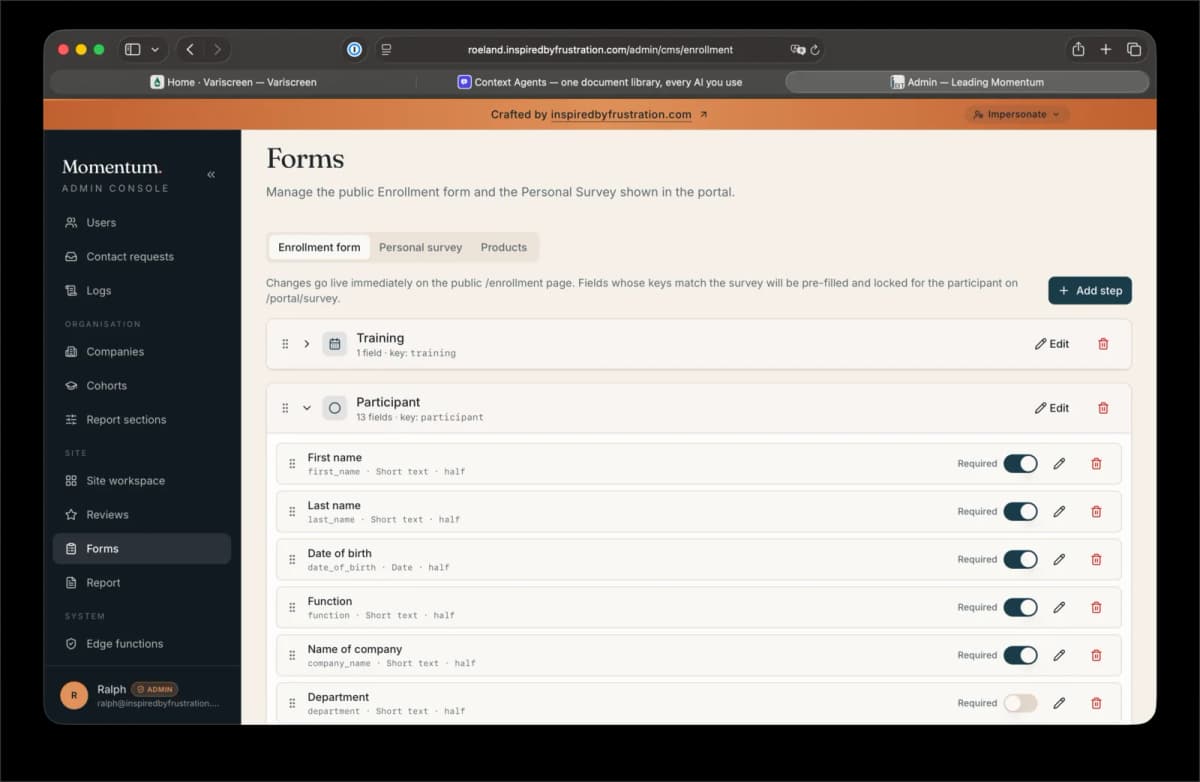
The refreshed case study keeps the Roeland image set API-backed so the project can appear consistently across the projects page, detail page, sitemap, and structured data.
Problem
Local-service pages often ship quickly but lack measurement. They may look acceptable, yet nobody knows which referrals arrived, whether the offer is clear, or how the page connects back to the broader studio ecosystem.
For Roeland, the page needed to be treated as a small product surface: public copy, route structure, attribution, and follow-up workflow all matter.
System
The system combines a Lovable-built public surface with UTM-first referral tracking back to the main site. That avoids relying on browser referrer behavior, which is often stripped or incomplete.
The project is intentionally separate from the core monorepo but represented here as a case study so the public portfolio reflects the full surface area of work.
What shipped
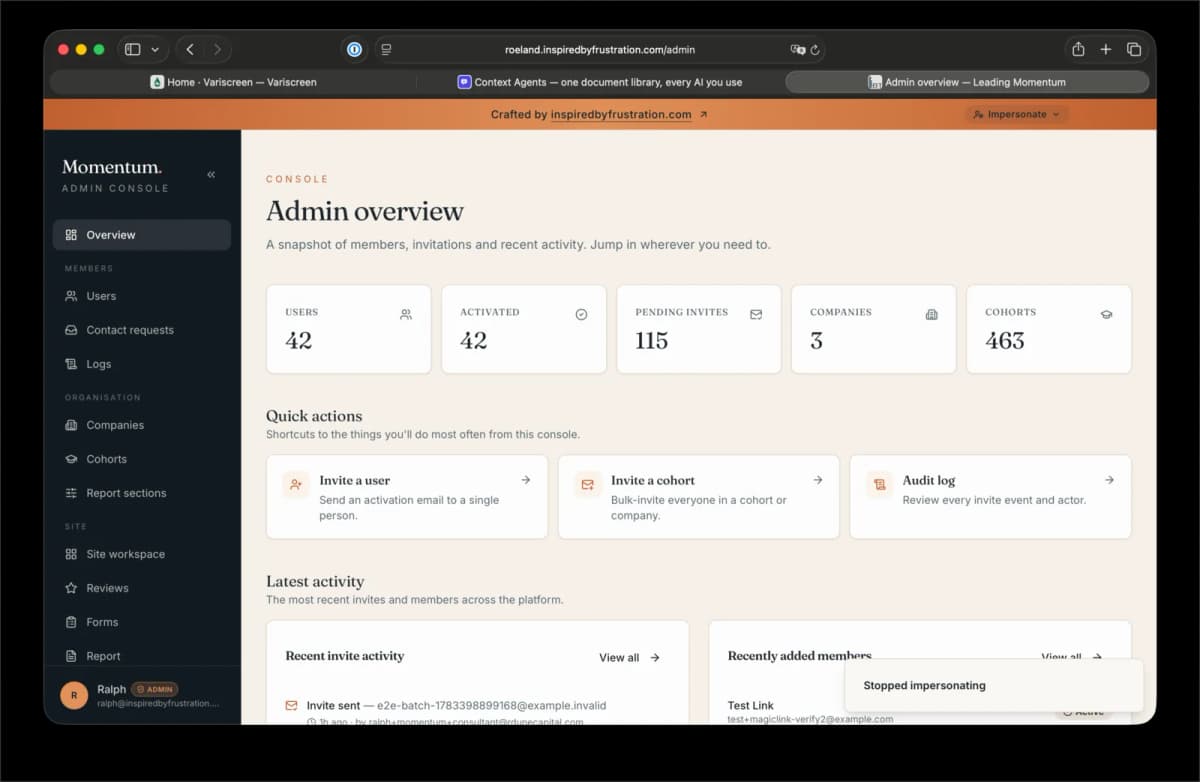
The API-backed record includes the Roeland hero and gallery assets, public URL, service-site positioning, and SEO metadata. The case-study content now explains why analytics and attribution are part of the build rather than an afterthought.
SEO angle
The useful target is not a broad national keyword. The page should emphasize local service website execution, Lovable workflow, and referral attribution, which better match the actual work.
- The Roeland gallery should show offer clarity, first-screen messaging, and referral path rather than generic local-business imagery.
// search questions
Why use UTM tags for a referral site?
UTM tags survive more reliably than document.referrer and make referral traffic easier to segment in analytics. For Roeland, UTM attribution is the primary signal back to the main site.
Can a small local-service site still need production QA?
Yes. Small sites still need fast loading, clear offers, working analytics, correct links, and a way to iterate without losing track of what changed.
// continue with the real product
[ product evidence ]
[ build something like this ]
Have a similar bottleneck? Turn it into shipped proof.
Same operator and green-gate build process behind Leading Momentum. One brief, one ship — replies within 24h.