
// inspired by frustration
Build an MCP Server.
Model Context Protocol is how AI agents talk to real systems. I build production MCP servers for Lovable apps, internal tools, databases, and AI workflows.
In short
Inspired by Frustration builds production Model Context Protocol (MCP) servers for Claude and other AI agents — exposing your APIs, databases, and internal tools as governed, auditable agent actions.
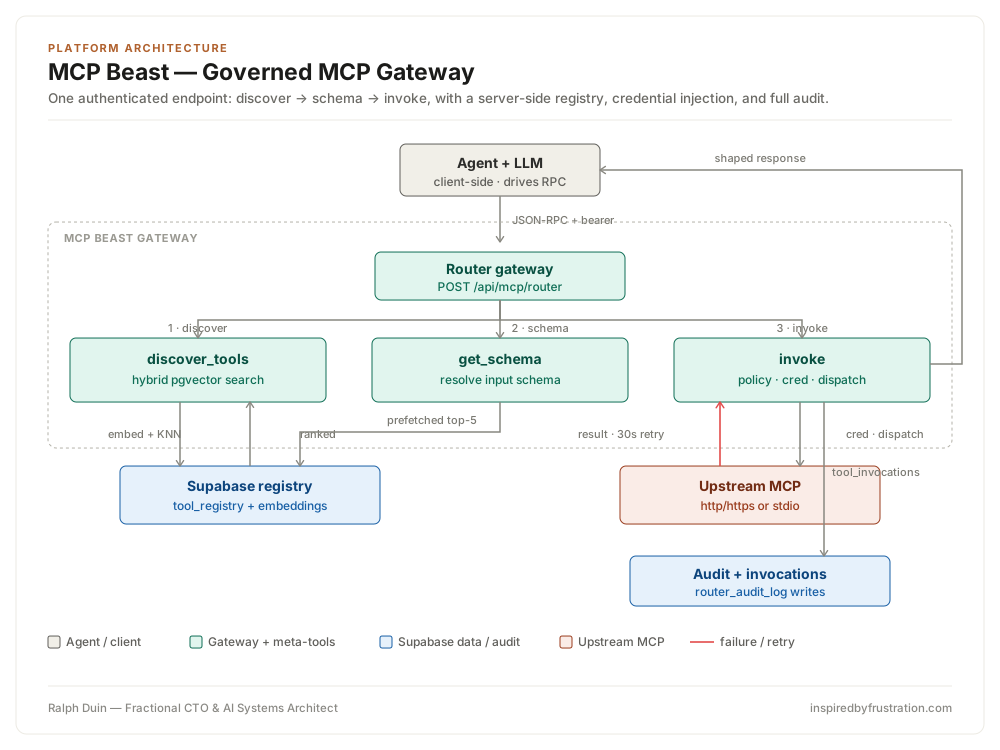
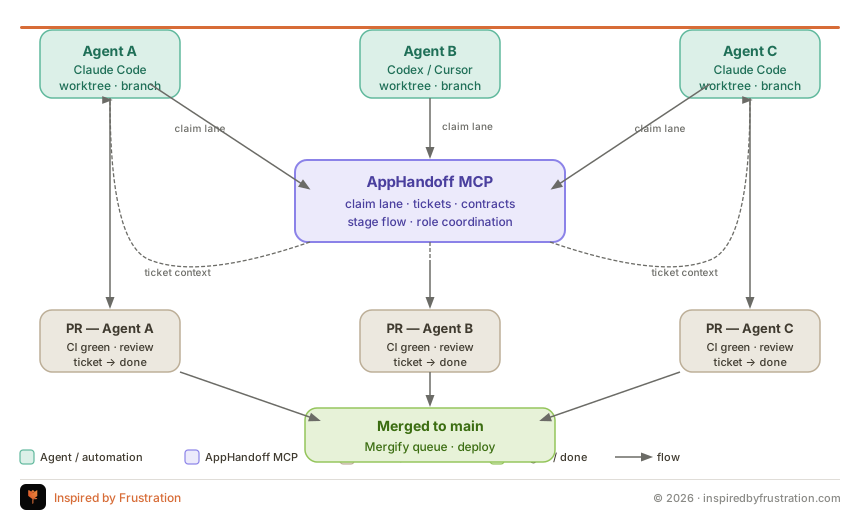
- It is run by a senior engineer who has shipped two MCP products in active use: AppHandoff, an MCP coordination layer for AI coding agents, and MCP Beast, an enterprise MCP proxy that cuts always-on tool context from roughly 38,000 tokens to about 400 via three meta-tools and hybrid vector + keyword discovery.
- Servers ship with auth, rate limiting, circuit breakers, and a per-invocation audit log — not tutorial examples.
The Model Context Protocol (MCP) is an open standard from Anthropic that defines how AI models like Claude connect to external tools, data sources, and systems.
I've built multiple production MCP servers - AppHandoff and MCP Beast - running in real teams today, including Lovable handoff and backend coordination workflows.
What we deliver
Custom MCP Server Build
Tool registration, resource definitions, lifecycle management. TypeScript SDK, Zod schema validation, structured logging — production-grade from day one.
Lovable MCP Servers
Turn a Lovable app into an agent-ready product by exposing backend contracts, handoff tickets, and integration actions through MCP.
API & Database Integration
Expose your existing REST API, GraphQL endpoint, or database to AI agents. Your infrastructure doesn't need to change — I write the MCP layer on top.
Authentication & Security
API keys, scoped tokens, or OAuth for MCP access. Secure endpoints that don't expose your systems to any process that asks.
Enterprise MCP Governance
Tool-level access control, usage logging, rate limiting, audit trails. For teams that need visibility into what AI tools are accessing what systems.
Why us
Built Production MCP Servers
AppHandoff MCP and MCP Beast are running in real teams today — not toy examples from a tutorial.
Thinks Like an AI Agent
Good MCP design requires understanding how AI reasons, not just how APIs work. Tools need to be self-describing, idempotent, and informatively failable.
Works With All MCP Clients
Claude, Claude Code, Claude Desktop, and any custom agent built with an MCP client library. The spec is client-agnostic.
// what clients say
Proof from shipped work.
We came in with a Lovable prototype and a board deadline. Three weeks later we had a typed backend, real auth, and an MCP server our support agents actually trust. The POC went to production without the usual rewrite tax.
DaanHead of Engineering
fintech scale-upPOC → production
I needed someone who could orchestrate a swarm of coding agents and still own the architecture. The agent-orchestration setup shipped 40+ PRs in a week — every one reviewed, scoped, and reversible. No hallucinated mess to clean up.
M.R.Founder
B2B SaaSagent orchestration at scale
The MCP integration was the part three other vendors quoted us six months for. Here it was live in under three weeks — tool schema, OAuth, rate limits, traces, the lot. Our Claude agents finally touch real data safely.
PriyaVP Product
healthtech startupMCP integration
Ready to make your systems AI-native?
Describe the system you want to make AI-accessible and what AI client you're targeting. I'll tell you what's realistic and what the first version should look like.
Get in touchFAQ
What is an MCP server?
MCP (Model Context Protocol) is an open standard from Anthropic that defines how AI models like Claude connect to external tools, databases, and APIs. An MCP server exposes your systems as callable tools that AI agents can use — reading data, writing records, triggering workflows — within the controlled structure of the protocol.
Can you build an MCP server for a Lovable app?
Yes. A Lovable MCP server can expose backend contracts, content workflows, support actions, analytics, and database operations to AI agents while keeping auth, validation, and audit logging outside the generated frontend.
How long does it take to build an MCP server?
A simple MCP server exposing a REST API or database via read-only tools takes 1–3 days. A production-grade server with authentication, write operations, error handling, rate limiting, and schema validation typically takes 1–2 weeks.
Which AI clients work with a custom MCP server?
Any client that supports the MCP spec: Claude Desktop, Claude Code, and custom agents built with the MCP client SDK. The protocol is client-agnostic, so a properly built MCP server works across all of them without modification.