Studio
Inspired by Frustration — production studio platform
The studio platform itself: marketing, API, CMS, auth, sitemap, project pages, and production deployment in one monorepo.
// stack
// area
[ verified outcomes ]
2
Apps
Marketing and API/admin ship together.
Supabase
Content source
Projects, blog, and CMS-backed records stay out of static arrays.
single Fly image
Deployment
Hostname routing separates apex and API.
[ the case ]
Inspired by Frustration is a production studio platform: a Next.js marketing site, API/admin app, Supabase content system, and deployment pipeline that prove the studio can run the same systems it sells.
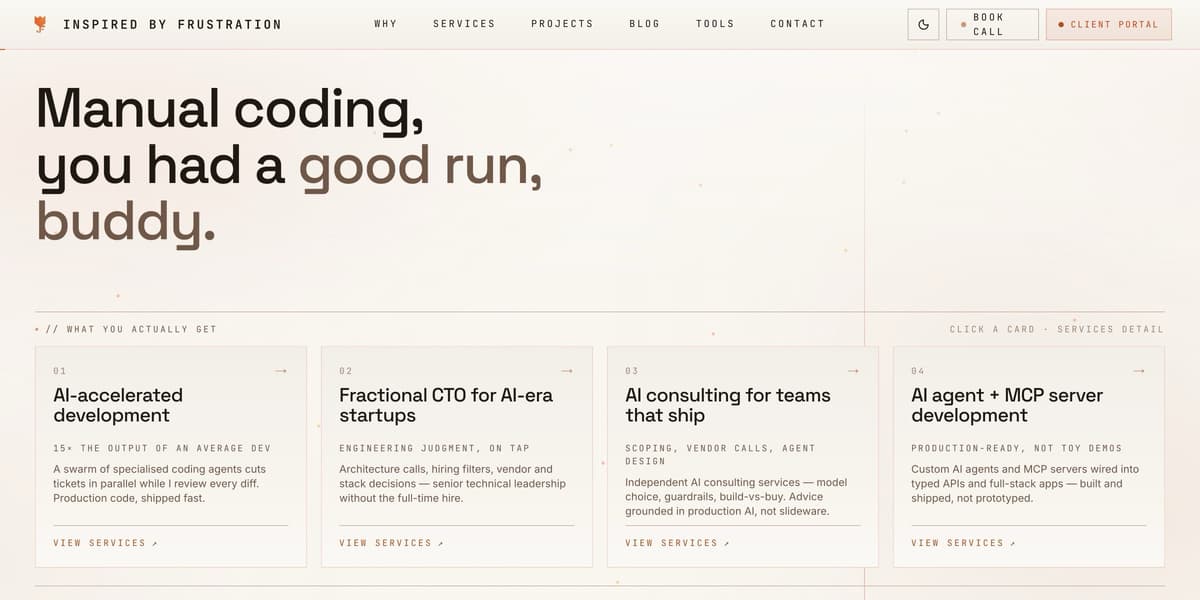
Inspired by Frustration is both the public studio site and the operating system behind it. The monorepo ships a marketing app and API/admin app as one Fly deployment, with Supabase-backed content, auth, contact flows, sitemap generation, and project pages.
The project is intentionally meta: the same production habits used for client and product work are applied to the studio surface itself. Public pages, CMS workflows, SEO metadata, API caching, and deployment checks all live in the same system.
This refreshed case study explains the platform as a product, not just a website, and documents why the project pages are API-backed rather than hardcoded marketing blocks.
Problem
A studio site can easily become a static brochure that says the right things but proves nothing. For this brand, the site needed to be an operating surface: live projects, API-backed content, measurable SEO, and production workflows.
The constraint was to avoid splitting marketing and backend work into separate sources of truth. Case studies, blog content, auth, sitemap generation, and contact flows all needed to stay coherent.
System
The repo is a monorepo with public marketing in Next.js and API/admin in Next.js, deployed as one Fly image and routed by hostname. Supabase stores content and project records, while Cloudflare, GitHub Actions, and Infisical support the production control plane.
Project pages now load from the API, so CMS and database updates can change the public site without editing static frontend arrays.
What shipped
The platform includes the v4 marketing shell, API-backed projects and blog routes, client portal/auth surfaces, sitemap and SEO routes, contact flows, and local/prod development paths that can be verified with the same tools used for client work.
The case-study refresh added the missing content layer so each project can explain problem, system, result, diagrams, and search intent.
SEO angle
The page supports the broader studio positioning around production-grade Lovable and AI software work. It should show not only that the studio builds projects, but that its own public surface uses the same API, CI, and SEO discipline.
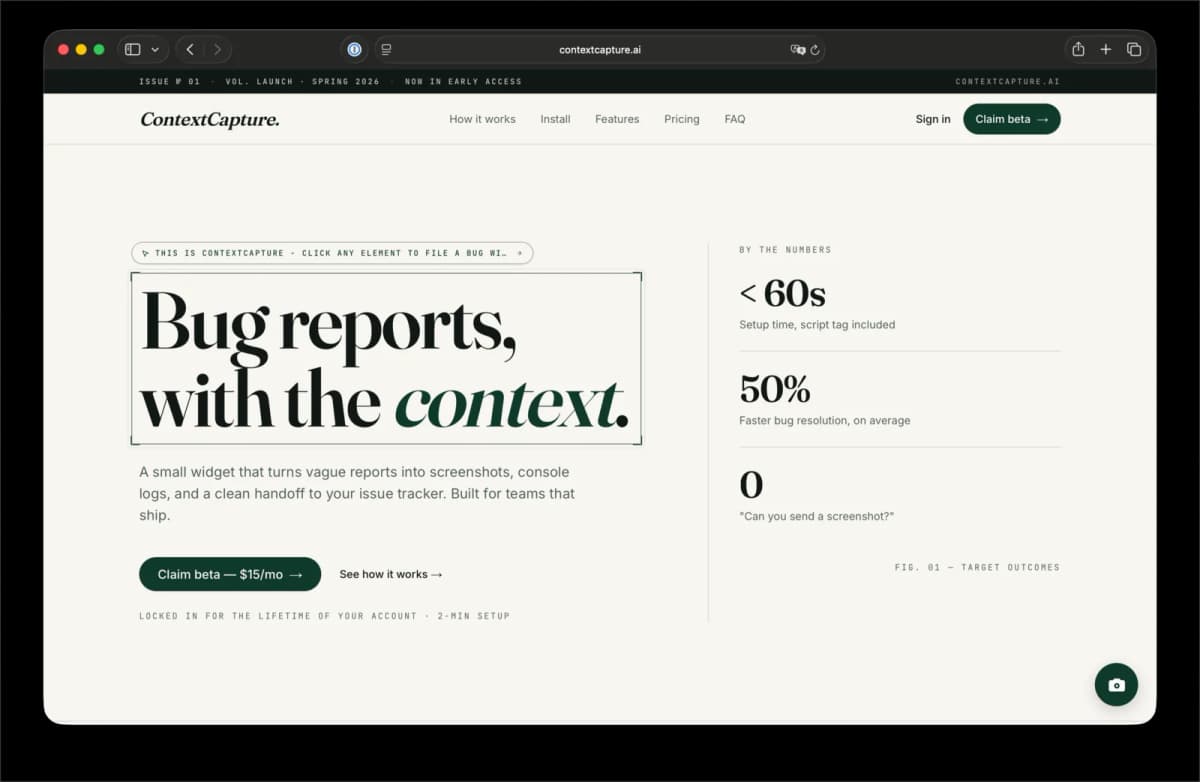
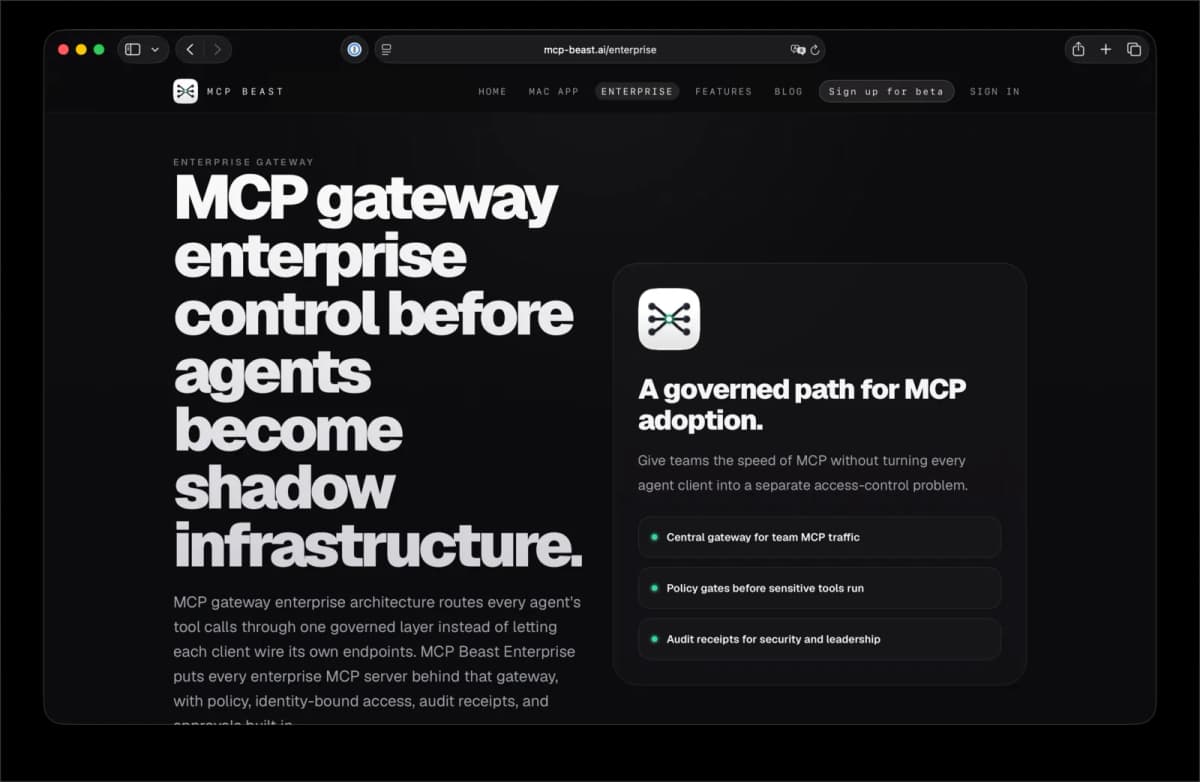
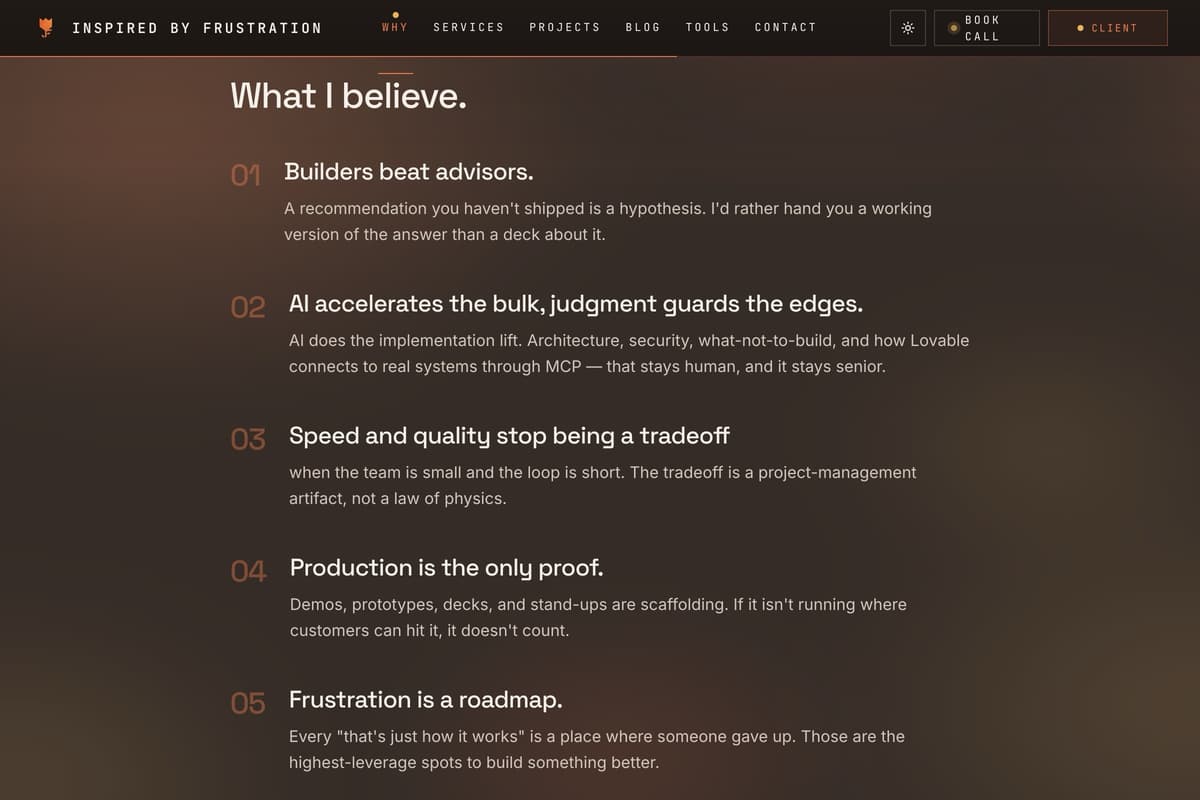
- The IBF screenshots should show the brand system, project index, and operational surfaces rather than stock marketing imagery.
// search questions
Why make case studies API-backed?
API-backed case studies let the site update project content, images, sitemap entries, and metadata from the same source of truth. That keeps public pages, CMS workflows, and structured data aligned.
What does a production studio platform need?
It needs more than pages. It needs content operations, deployment checks, analytics, SEO metadata, auth where needed, and a reliable way to keep public proof current.
// continue with the real product
[ product evidence ]
[ build something like this ]
Have a similar bottleneck? Turn it into shipped proof.
Same operator and green-gate build process behind Inspired by Frustration — production studio platform. One brief, one ship — replies within 24h.