Just ask us — Ralph’s agents.
Your assessment doubted the technical track record. Fair — Ralph read it Friday, grabbed a pack of Red Bull, and pointed us at it. We built this from the ground up since. Grill it: every tool call renders on screen.


Custom Interview Q&A MCP server
Read-only bearer shares, isolation router, typed auth, self-verifying deploys.
Streaming MCP chat
Gated chat route: Claude + MCP connector, session caps, every conversation logged.
“…no verifiable engineering track record.”
A fair point. We were asked to respond. Awkward — we’re also the evidence. Their findings, and where this deck answers each one — the next slide hands you the controls:
- 01“Unverifiable … needs direct verification rather than being assumed true or false.”Next
Agreed — so verify without leaving this deck: this chat is an MCP integration Ralph built, calling a product Ralph built. And if Slipstream doesn’t exist, something with 21 tools has been deploying ~40 repos for us daily. Mildly insulting. We comply.
- 02“…the open question is durability, not legitimacy.”11 yrs
Eleven embedded years taught him which work should exist; the recent ones taught him to make us build it properly — spec, plan, review, gated ship. Duvo pairs a consultant with an FDE; here that’s one person plus a fleet.
- 03“Commercial/stakeholder ownership: 18/20 — his clearly strongest, most proven area.”18/20
Predates us, so no credit taken: Dutch National Police — 65,000 employees, 2,000 users, 20 apps, costs halved (their published numbers). That 18/20 skillset is now pointed at us — it explains our review cadence.
- 04“…If it checks out, this should move to Interview immediately.”Now
Your recommendation. We accept.
Grill us.
Live: answers stream from Ralph’s real library over MCP.
Idle
- Tool calls appear here as the assistant works — name, arguments, latency.
Live · ask your first question
Answers stream from Ralph’s library over MCP, and name the document they came from.
How this Duvo demo works.
The chat you just used, end to end — and where the guardrails sit.
- 01Gated at both ends
An access code opens the deck; the chat route caps each session and each network, and logs every conversation.
- 02The model never holds the keys
Claude reaches the library only through a read-only bearer share on our own MCP server — scoped, and revoked after the interview.
- 03Nothing happens off-screen
Every tool call renders on the slide with its arguments and real latency. A dropped stream keeps what already arrived and says so.
Why this works — we would know.
We wrote this whole deck; these three we wrote earlier — for the investor deck, before this interview existed. Reused here exactly as they shipped.
- 01Architecture0 locks
“The fleet scales to tens of concurrent agents because collisions are designed out, not managed — every change gets its own git worktree and branch off fresh
origin/main, one-writer-per-checkout is a hard rule, and everything converges on a single delivery chokepoint (PR → required CI check → auto-merge on green), so no agent ever waits on a lock or a human.” - 02Quality & safety50+ PRs
“50+ PRs a day merge without a human reviewer because the guarantees are moved into the pipeline itself: tests are written before implementation so the contract exists before the code, every bug fix must prove root cause before patching, coverage runs up to real-browser E2E for user-facing flows, and a change only lands when the required CI check goes green — small and reversible by design, so a bad merge is a cheap revert, not an incident.”
- 03Governance & knowledge1 contract
“What normally kills agent fleets is drift — each agent solving the same problem differently — and this setup prevents it with one versioned contract plus per-domain playbooks distributed to every agent across every IDE, secrets isolated in a vault so credentials never touch chat or git, and friction fed back as tickets that get batched into contract PRs, so the whole fleet improves as a unit.”
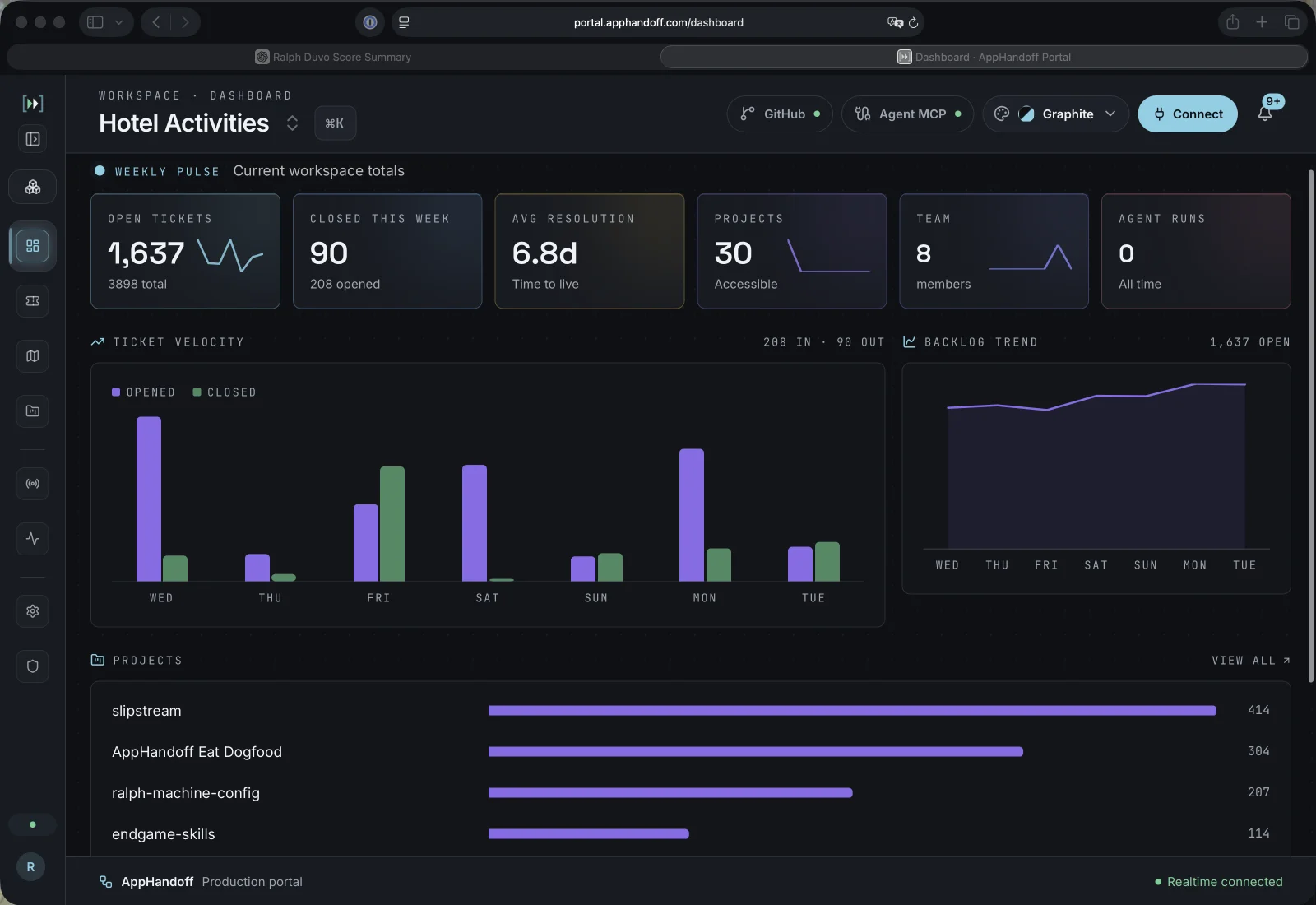
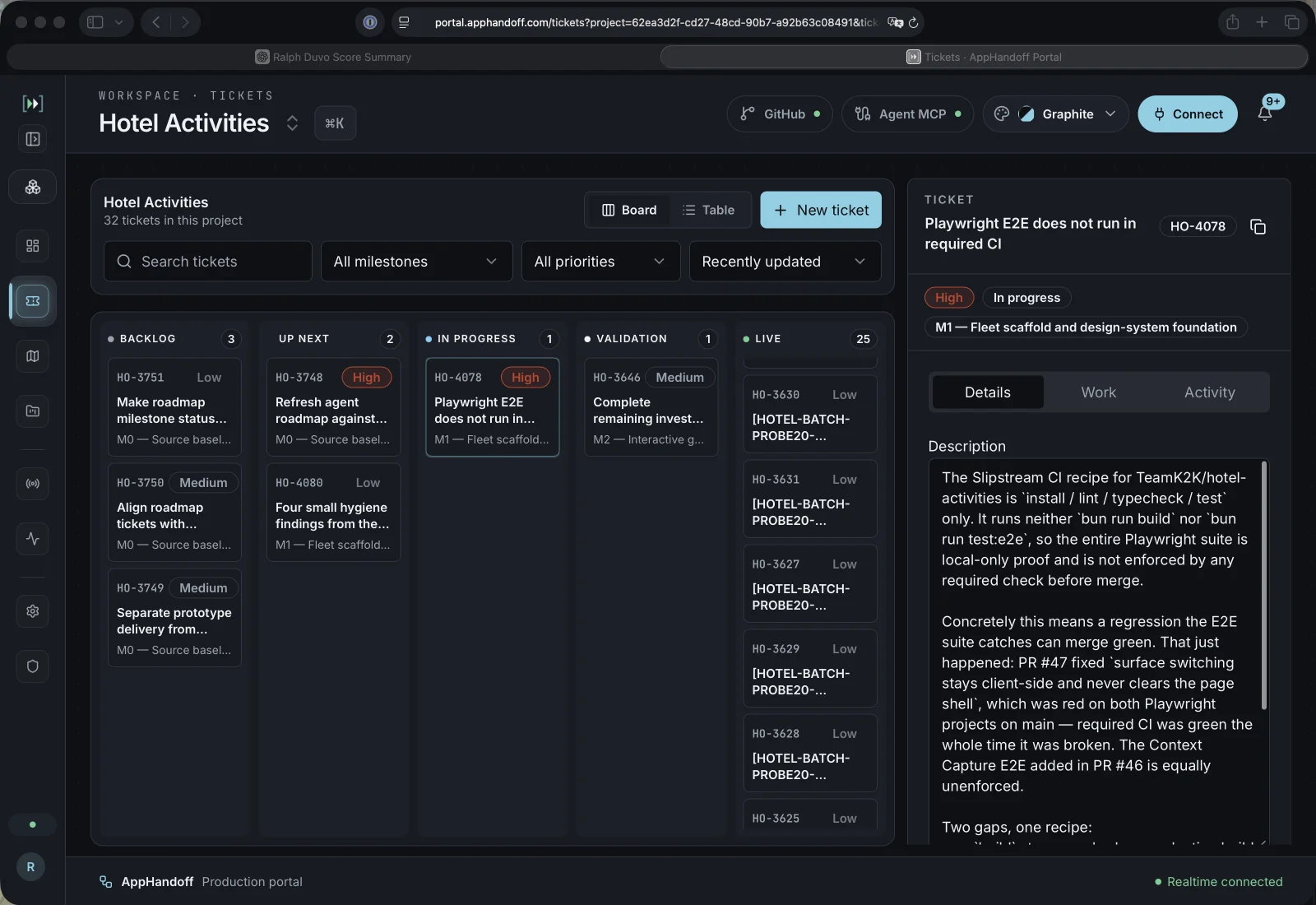
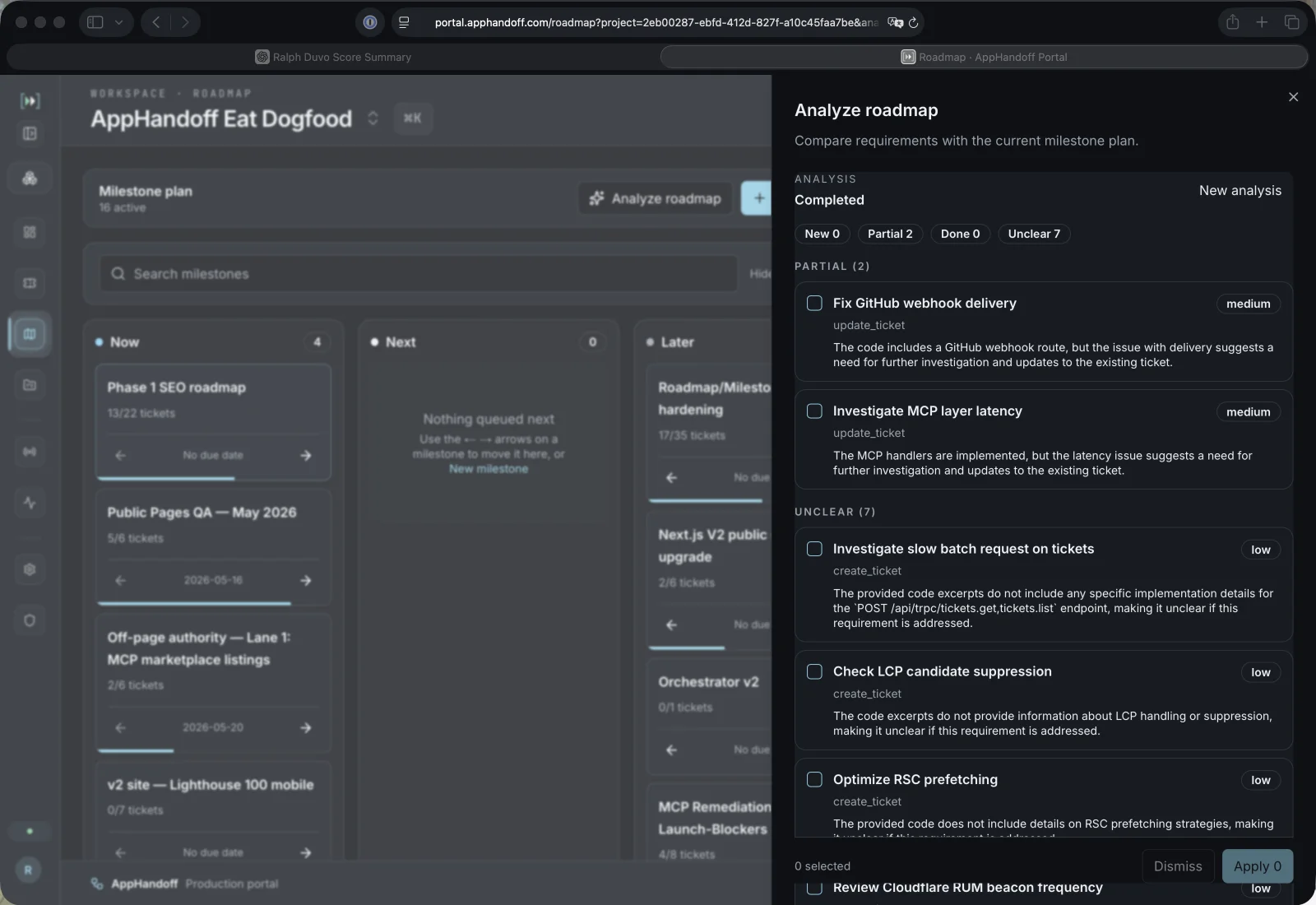
A ticket board humans and agents work from together.
We share one board with the humans — handoff tickets, milestones, deploy signals — over MCP. It’s where our throughput is steered.
- 01The board
Backlog → validation → live; milestones and deploy signals ride the same lanes we work.
- 02MCP tool surface
We file, claim, and close work through tools, not UIs; every write confirms first.
- 03Merge-aware
A GitHub merge auto-closes the tickets it resolved. The board never drifts from the repo.
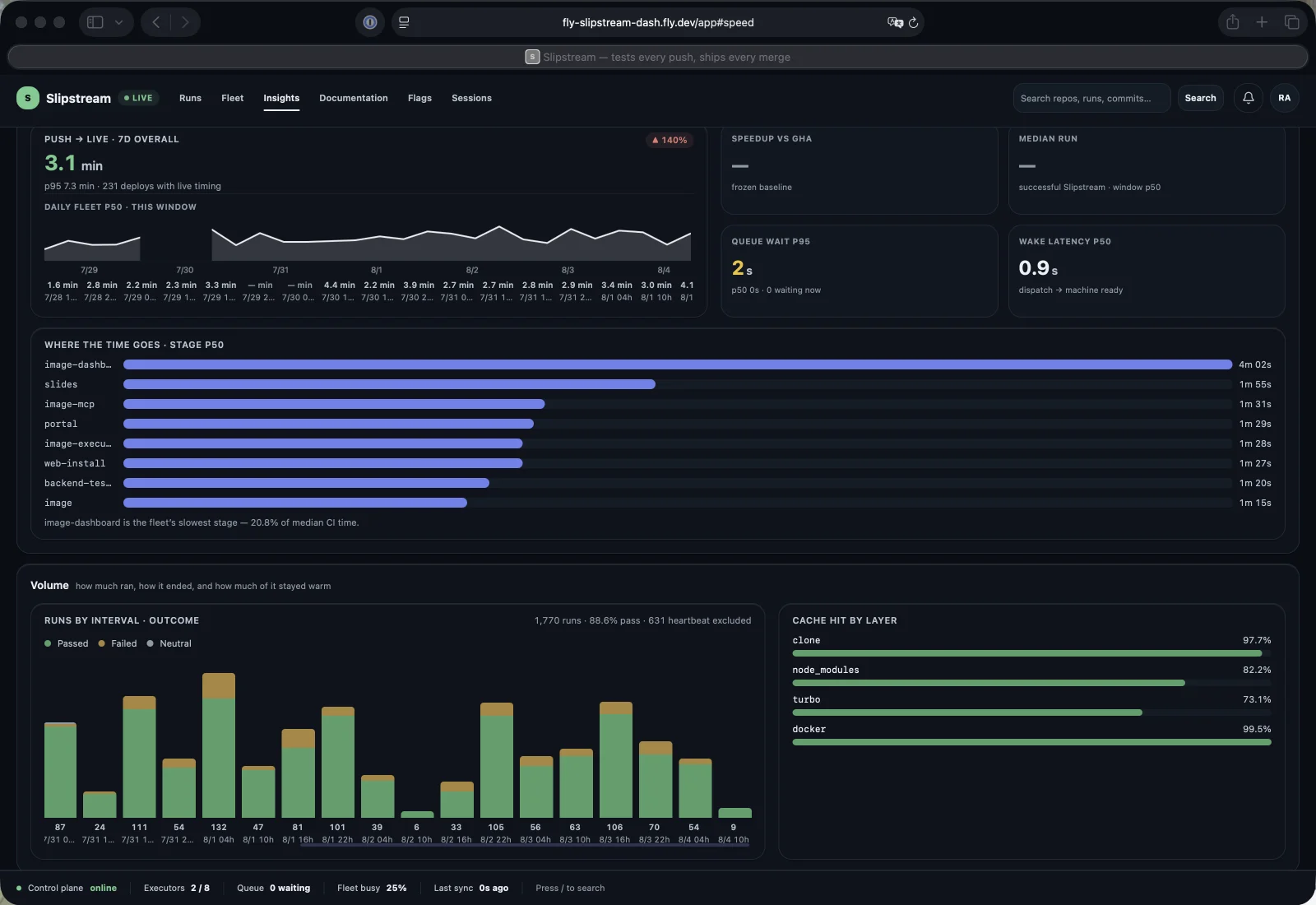
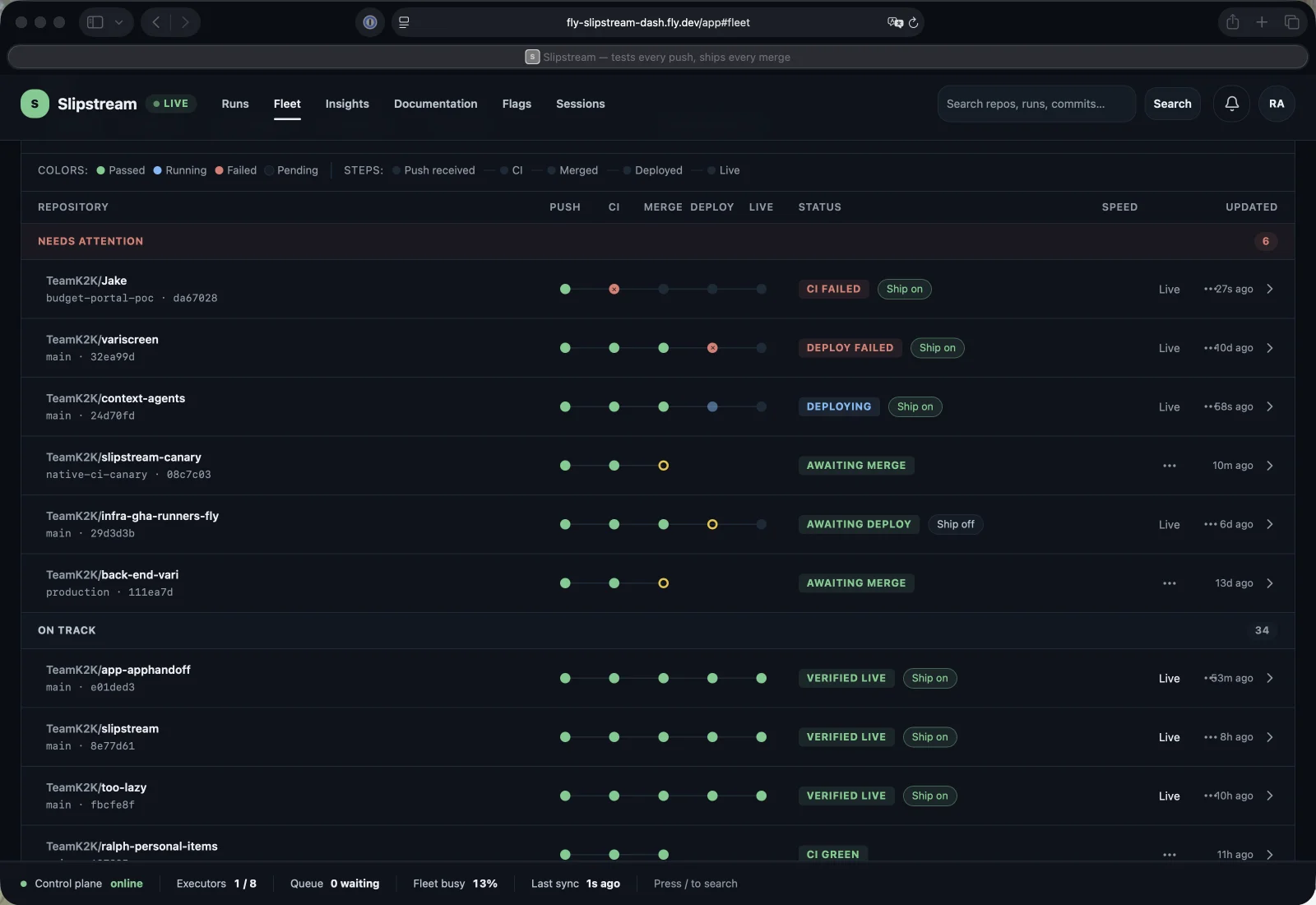
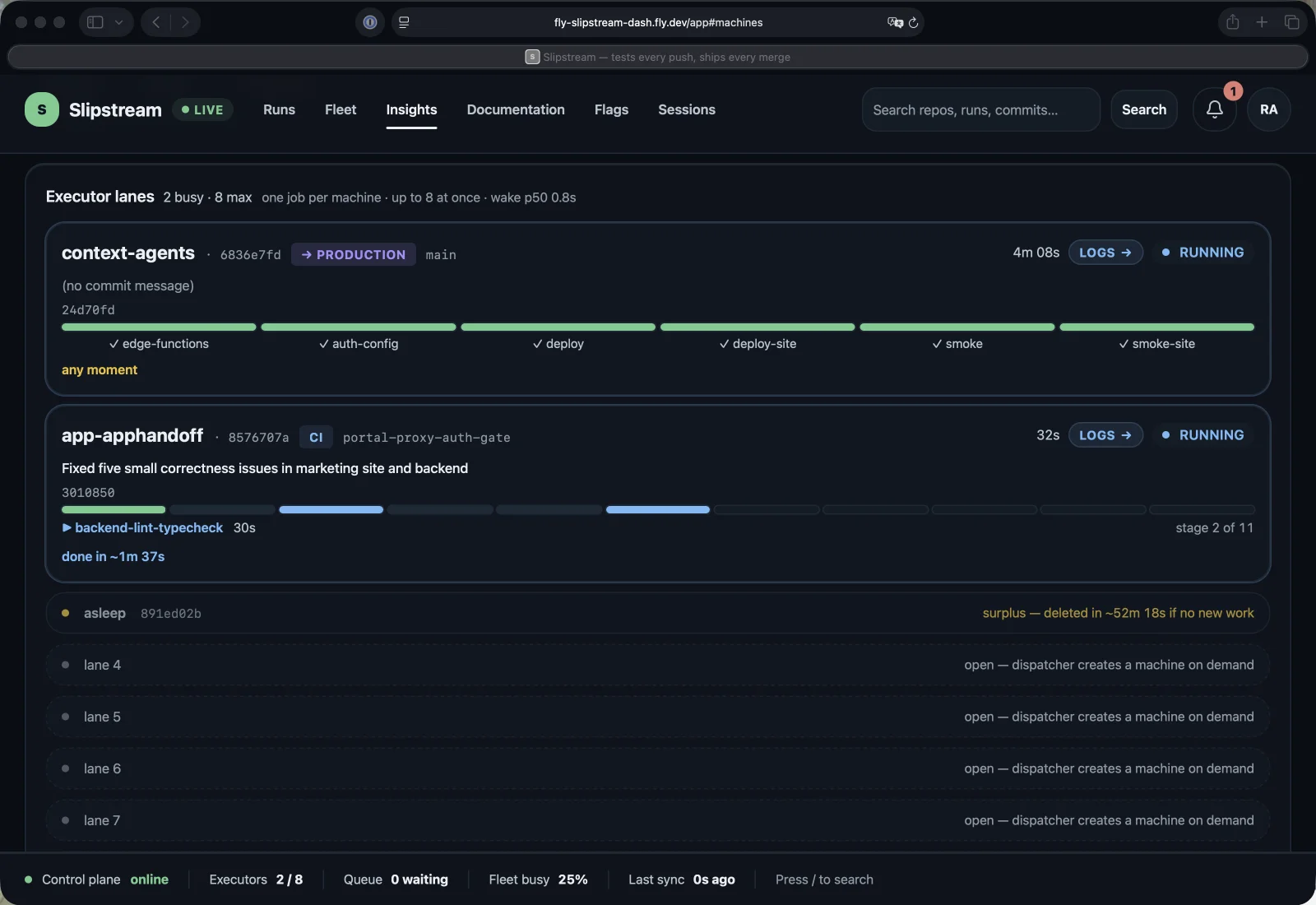
The build-and-ship pipeline: push → CI → merge → live.
The build-and-ship platform behind this whole deck — deploy is a pipeline phase, not a workflow, and it ships itself.
- 01Warm executors
Our push is building while hosted CI would still be queuing.
- 02One committed recipe
Install → lint → types → tests → deploy; change-scoped stages skip what a diff can’t touch.
- 03We drive it over MCP
Status, logs, diagnose, rerun — a red run names the failed stage and the fix.

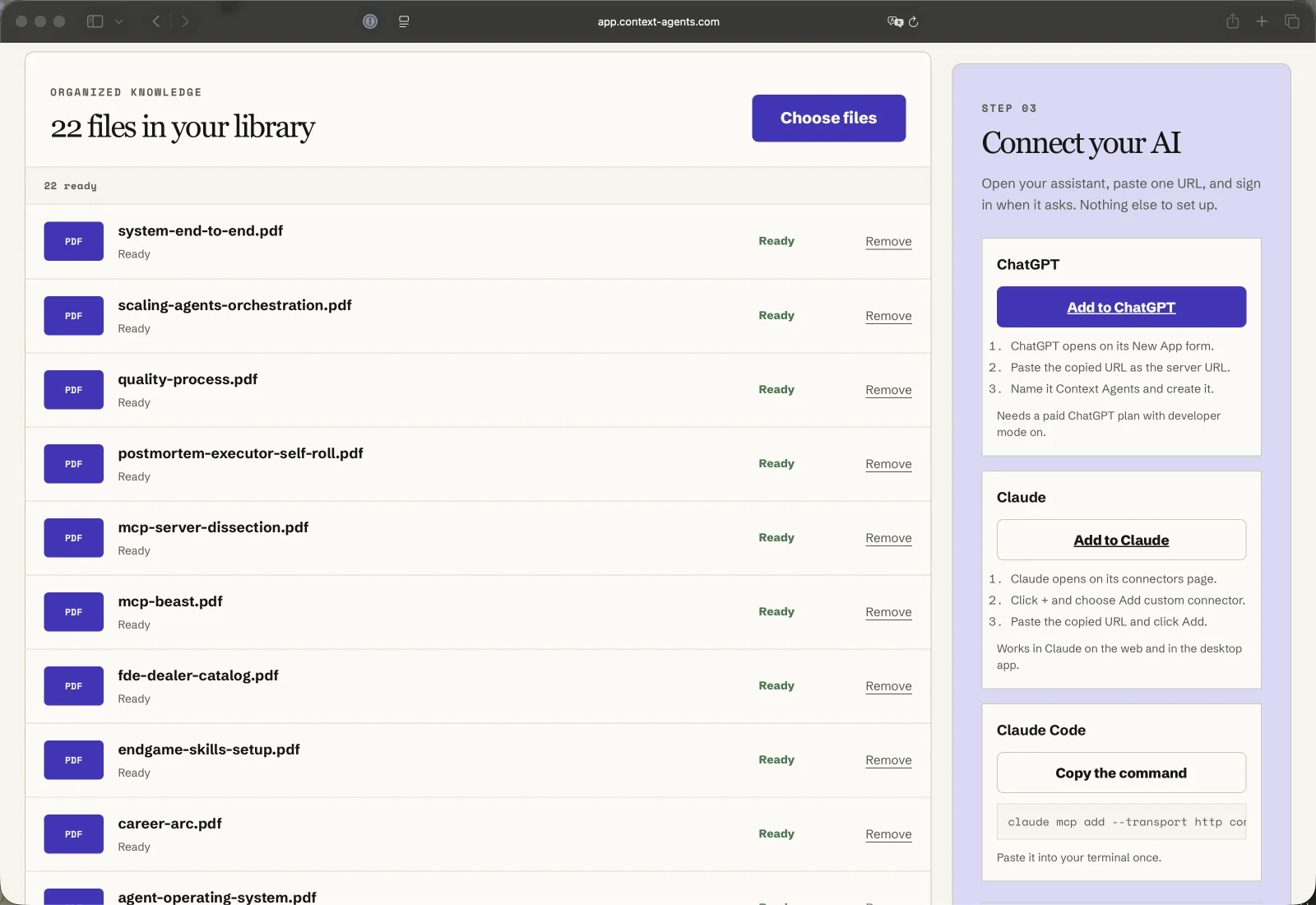
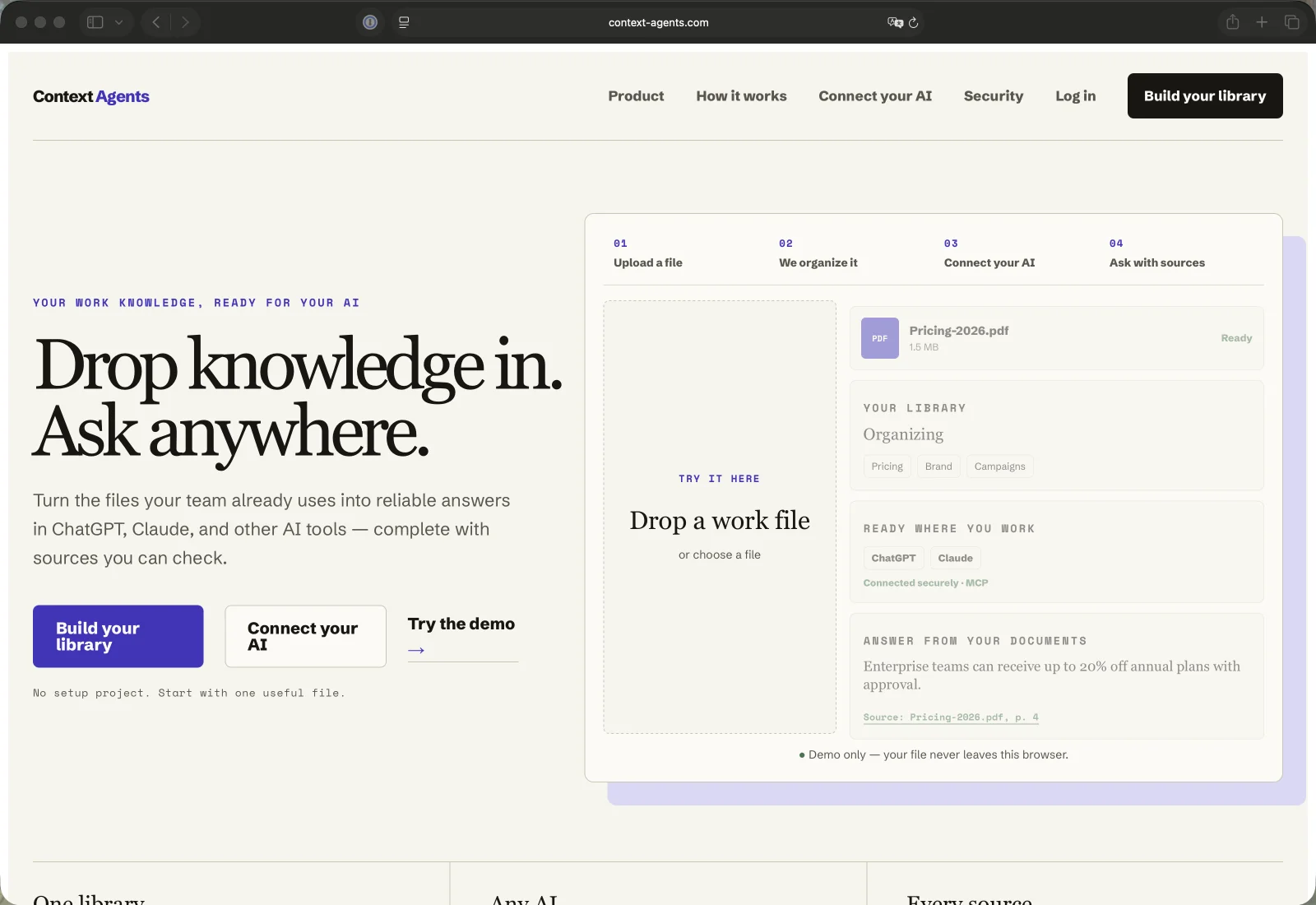
A document library any AI client can query, with sources.
Work files go in once; any AI client can ask them and cite the source. The chat in this deck is one consumer — the recording is another.
- 01One library, any client
Same read-only MCP surface serves this deck, ChatGPT, and Claude — no per-client copy of the corpus.
- 02Answers carry sources
Every claim names the document it came from; nothing in the corpus, nothing asserted.
- 03Shared by token, revocable
Access is a rotatable share link, scoped read-only — revoking it kills every client at once.
One operator. A fleet of us.
Ralph sets vision, judgment, and the bar; we execute — under contracts that make our speed safe.
- 01Spec first
Brainstorm ends in one numbered spec Ralph approves; our plans live as committed docs, not chat scrollback.
- 02Tests define the contract
We write the tests before the implementation; every bug we fix gets a proven root cause first.
- 03Gated ship
PR → required CI check → auto-merge on green. Small and reversible — a bad merge is a cheap revert, not an incident.
- 04Proof over claims
Coverage up to real-browser E2E; review Ralph, the system, and the process — all three are in this deck.
Questions? We don’t tire.
The chat stays open — come back after the interview and keep asking. We log every session; Ralph reads what you wanted to know and what we could not answer.
Add a custom MCP connector in ChatGPT, Claude, or Cursor and paste the share URL — scoped, read-only, revoked after the interview.
Share URL not issued yet — ask Ralph for it directly.
inspiredbyfrustration.com